
Sulawesi – Halmahera Solo Birding Trip Report 2023

It has happened to me again. I don’t know why, but I always act unprofessionally when I go birding alone. It is something that I will definitely regret later, but fortunately, it has never happened during my duty as a birding guide. For the 2022 birding season, I had planned to visit the new lek of the (Wallace’s) Standardwing Bird of Paradise in Aketajawe-Lolobata National Park, Halmahera. However, due to another unprofessional plan, I only visited Sulawesi on a rushed trip in August 2022, completely forgetting about Halmahera, which is only a one-hour flight from North Sulawesi. I hardly forgave myself for that. Nevertheless, I was ready to make a new plan for 2023.
My trip began in Labuan Bajo, West Flores, a coastal town that is a four-hour drive from my home in Ruteng, on March 23, 2023. I took a passenger ship operated by the Indonesian Passenger Shipping Company (PELNI) named Tilongkabila to Sulawesi. It was not a bad decision, and the trip went smoothly. The ship wasn’t too crowded, maybe because it wasn’t the holiday season. I booked the business cabin, which was fairly good compared to the economy class. It was a private room with two beds, air conditioning, and hot water. My belongings were safe, and I could free to go to the ship’s sides for birding along the way.

The ship left Labuan Bajo at 06:00 am and arrived in Makassar, South Sulawesi at 11:30 pm, an 18-hour journey on the sea. I spotted many species during the trip, including Brown Noddy, Lesser Frigatebird, Black-naped Tern, Lesser-crested Tern, White-bellied Fish-eagle, Pacific Reef Heron, and Great-billed Heron. In Makassar, I stayed at a hotel near the harbor.
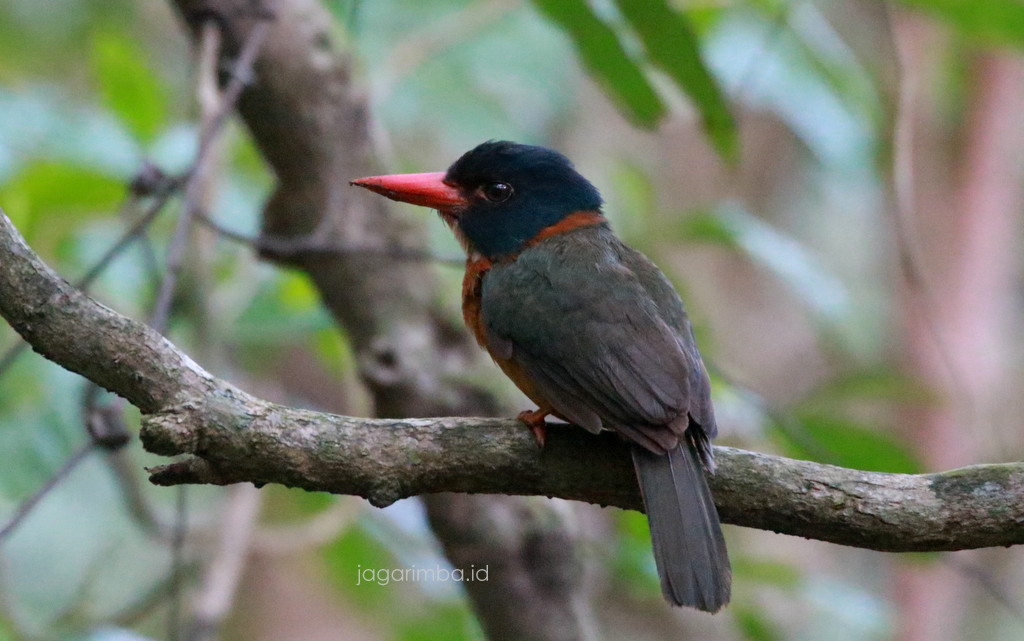
The next day, Hendra, a ranger from Bantimurung National Park, picked me up at 04:00 am. Our destination was the Karaenta forest, where we planned to see and photograph two attractive species: the Black-headed Kingfisher, (which has recently been split from its umbrella species, the Green-backed Kingfisher, and The Sulawesi Pitta. We drove for two hours to reach the Karaenta forest and managed to find the Kingfisher in the first ten minutes. However, the light was still low, making it difficult to take pictures or even see them clearly. So, we waited. We spent the whole morning in the area and managed to spot Sulawesi Malkoha, Sulawesi Hornbill, White-eyed Drongo, Grey-rumped Treeswift, Red-backed Thrush, Sulawesi Dwarf Kingfisher, Black Sunbird, and heard Piping Crow.
The rain poured earlier than we expected, and we only saw the Pitta twice for a short time. We heard them calling at least two or three times. We knew that the rain would be very heavy, and the sky was dark. We walked quickly to reach the car and sheltered for about half an hour in the palm forest until the rain stopped. We drove back to Maros through the heavy rain for the rest of the day.
The next morning, I took a flight from Makassar to Ternate, a volcanic island in the North Moluccas. It was lightly raining in the morning when we departed from Makassar. but for the rest of the trip, the weather was great. We landed under the sunshine in Ternate. I took a taxi from the airport to the Jetty. Ternate is the important home base for Alfred Wallace’s expedition in Indonesia, which I will write about in another post.
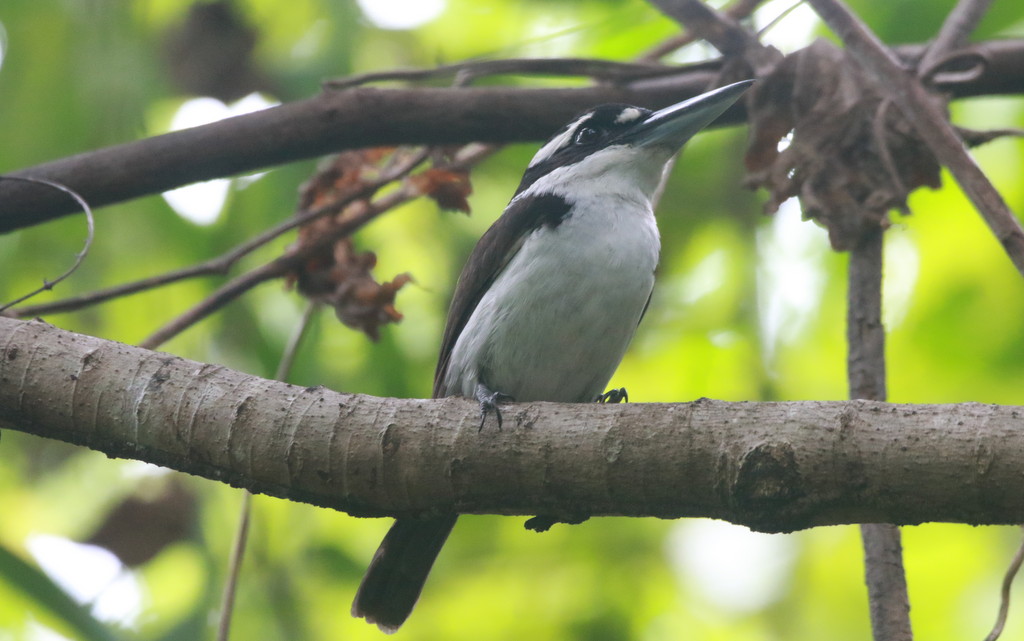
From Ternate, I took a speedboat taxi to Halmahera for about 45 minutes. Speedboats are the main public transportation for people in the North Moluccas Arc. When I arrived in Sofifi, Mahroji, a local birding guide in Halmahera, welcomed me with his smiling face (as usual) :-). We drove east around 75km to Mahroji’s village, Akejawi. For the next three days, I stayed at Mahroji’s simple and nice house next to the Aketajawe-Lolobata National Park. On the way, we saw Blyth’s Hornbills flying over a couple of times, and we also saw Blue-and-white Kingfisher and Metallic Starling, two common birds in Halmahera.
As we relaxed at Mahroji’s house, we managed to see Halmahera Flowerpecker, Willie Wagtail, Sahul Sunbird, Blyth’s Hornbill, Goliath Coucal, and Pied-Imperial Pigeon. It was lightly raining. We spent the rest of the afternoon at the bird hide a hundred meters away from the house. I photographed Ivory-breasted Pitta, one of the most sought-after birds for photographers who visit Halmahera.

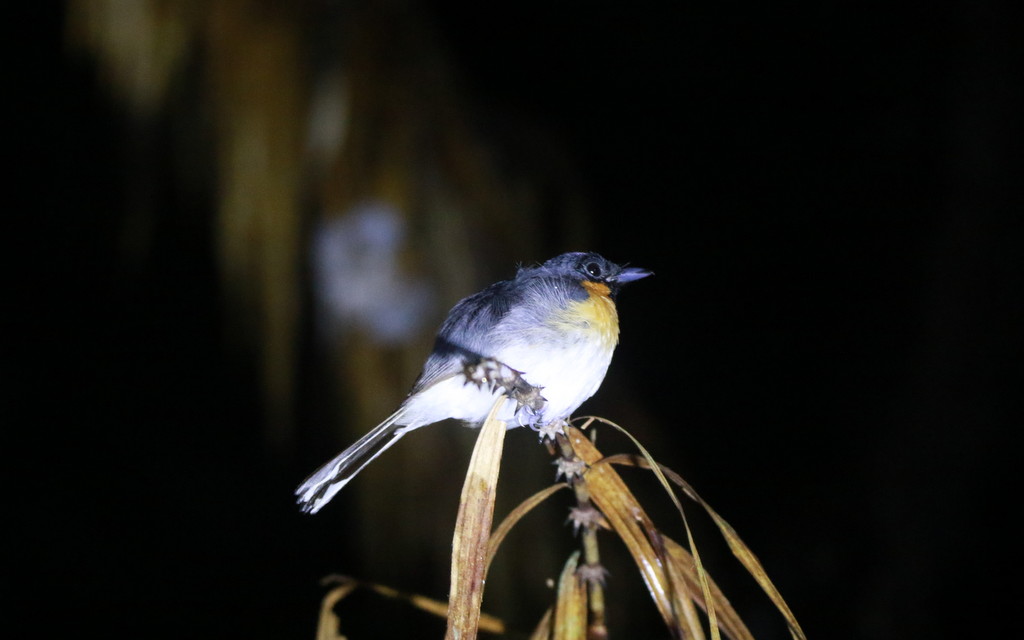
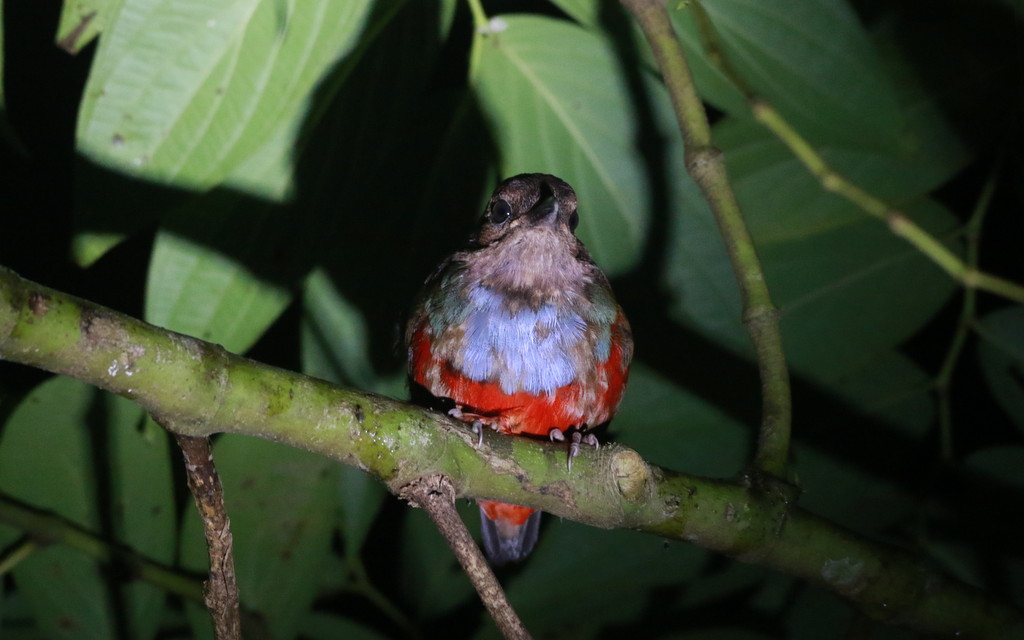
On the second day in Halmahera, we woke up early at 3:00 am, very excited for an important day to see the top birding target in Halmahera, Wallace’s Standardwing or Standardwing Bird of Paradise (Semioptera wallacii). We departed from Mahroji’s house at 4:30 am, then crossed the river separating the National Park and private lands. We walked on the concrete walkway into the National Park for about 500m. It was a surprising morning. I didn’t expect to see any targets here, but we did. We managed to see and photograph Moluccan Cuscus (Phalanger ornatus), North Moluccan Pitta (Erythropitta rufiventris), Moluccan Monarch (Symposiachrus bimaculatus), Shining Flycatcher (Myiagra alecto), and Black-chinned Whistler (Pachycephala mentalis).
Further into the deep forest, the trail became muddy and slippery, so we had to walk carefully on the limestone forest ground. Aketajawe-Lolobata National Park is dominated by limestone lowland forest. Mahroji had prepared jungle boots for me instead of my trekking boots.
After 3.5 km, we arrived at the campsite where Mahroji had set up two temporary tents as shelters. A bird photographer from Germany with his guide and porter stayed overnight in the shelter. They joined us, and we continued walking to the Wallace’s Standardwing watching platform. We walked through the slope then followed the stream till the trail went up directly to the platform, covering a total of 5 km from Mahroji’s house to the platform.
It was still dark when we arrived at the platform, but the Standardwing was already there, screaming under the dark on the high canopy. We waited around 30 minutes until the light came slowly and then recognized the Standardwing’s movements through the branches and thick leaves. It was an incredible moment when a pair of Standardwing clearly showed dancing alternately for more than an hour. We counted at least 5-7 individuals of Wallace’s Standardwing.
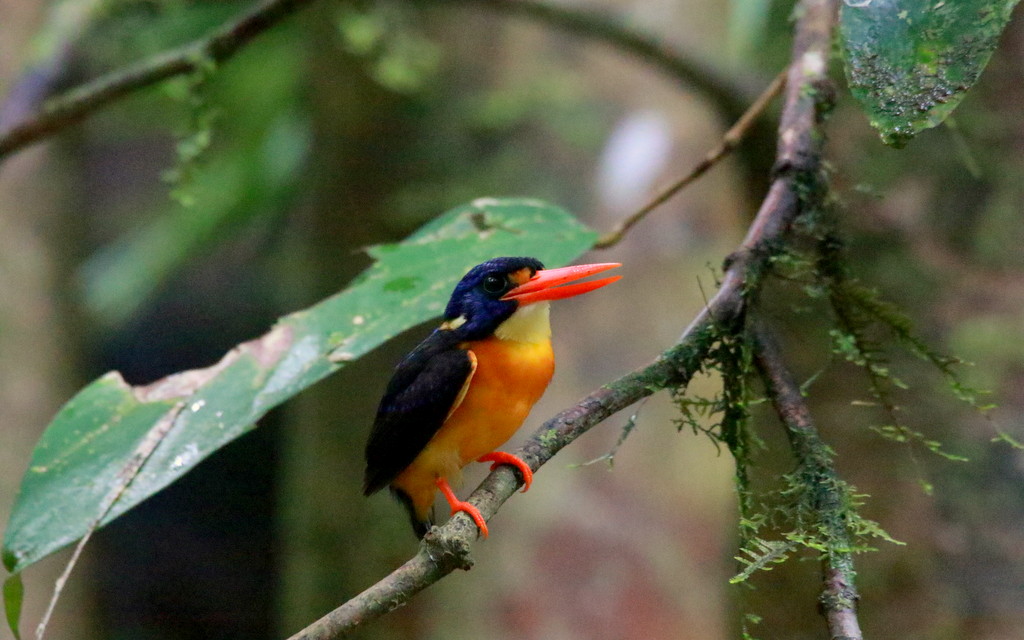
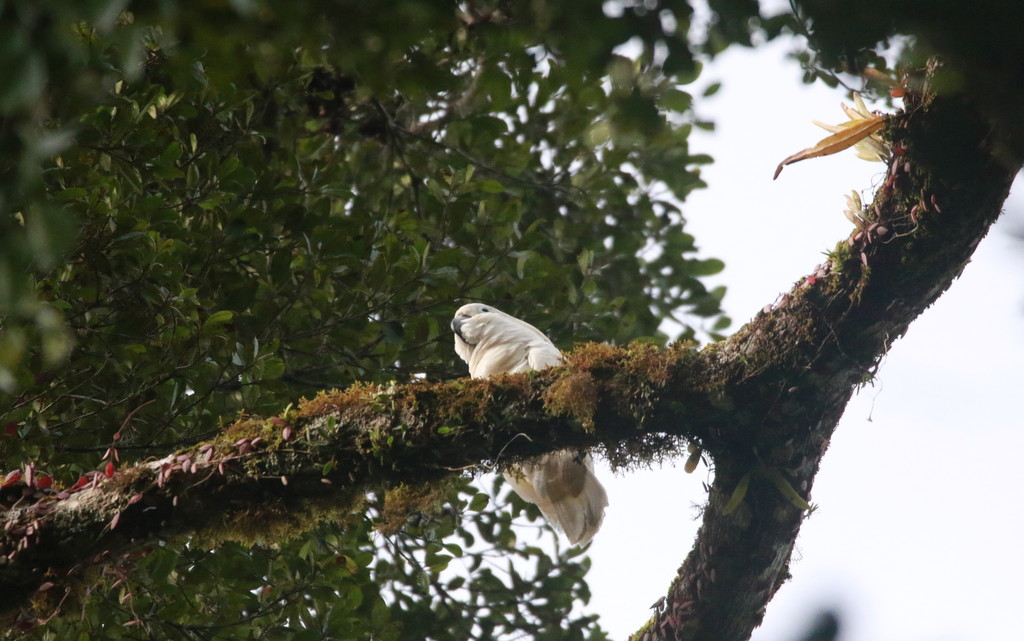
After finishing with the main target, we continued birding around the platform and managed to see Common Paradise Kingfisher, Moluccan Dwarf-Kingfisher, Scarlet-breasted Fruit Dove, White Cockatoo, Blyth’s Hornbill, and Eclectus Parrot. Around the shelter, we saw North Moluccan Pitta and Moluccan Scrubfowl.
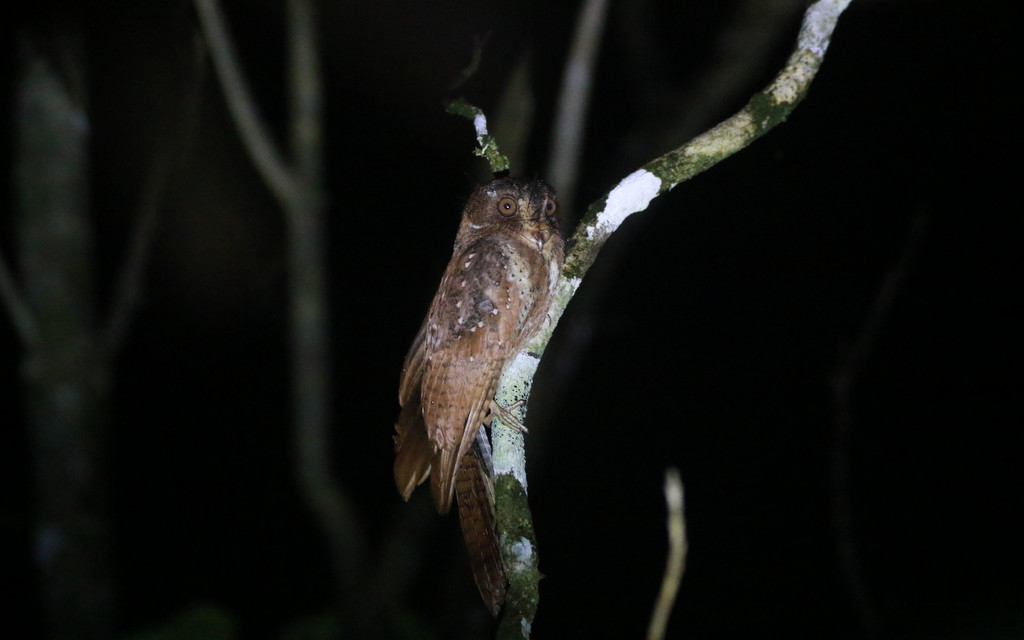
On the way back, we still managed to make productive birding. Many targets were easily found along the path sides, such as Cream-throated White-eye, White-streaked Friarbird, Golden Bulbul, Paradise Crow, Black-chinned Whistler, Spectacled Imperial-Pigeon, Blue-capped Fruit-Dove, Superb Fruit-Dove, and Sultan’s Cuckoo-Dove. We spent the rest of the afternoon birding around the house, continuing to find a night target here, the Moluccan Owlet Nightjar, which was quite tricky under the light rain during the evening. But in the end, it was a pleasure to enjoy photographing the calm and steady Owlet Nightjar, near the house.
On the last day in Halmahera, we drove to the east, with our main targets being the Common Paradise Kingfisher and Sombre Kingfisher. We managed to find them at different places. The first one, the Sombre Kingfisher, we found next to the Trans Halmahera, near Gunung Roni, and the Common Paradise Kingfisher was at Akejawi. Here we found three individuals with a bonus Azure Kingfisher.
After lunch, we left Akejawi and drove back to Sofifi. We made a quick stop before Dodinga, where we saw Red-cheeked Parrot and Moustached Treeswift. It was heavy rain when we entered Sofifi. We crossed to Ternate under the big storm and heavy rain. I spent a night in Ternate. The next morning, before leaving for the airport, I spent the whole morning visiting the hide for the North Moluccan Pitta. Here I saw and photographed the Pitta, Moluccan Dwarf Kingfisher, Shining Flycatcher, and Blue-and-White Kingfisher.
Overall, the tour was great and successful, even in the rush days. I hope next time to make a better plan, not as hurried as usual. Halmahera is still a high priority to visit in the next years to come. Many important targets are still missed. Some of the pics from the trip are attached below.